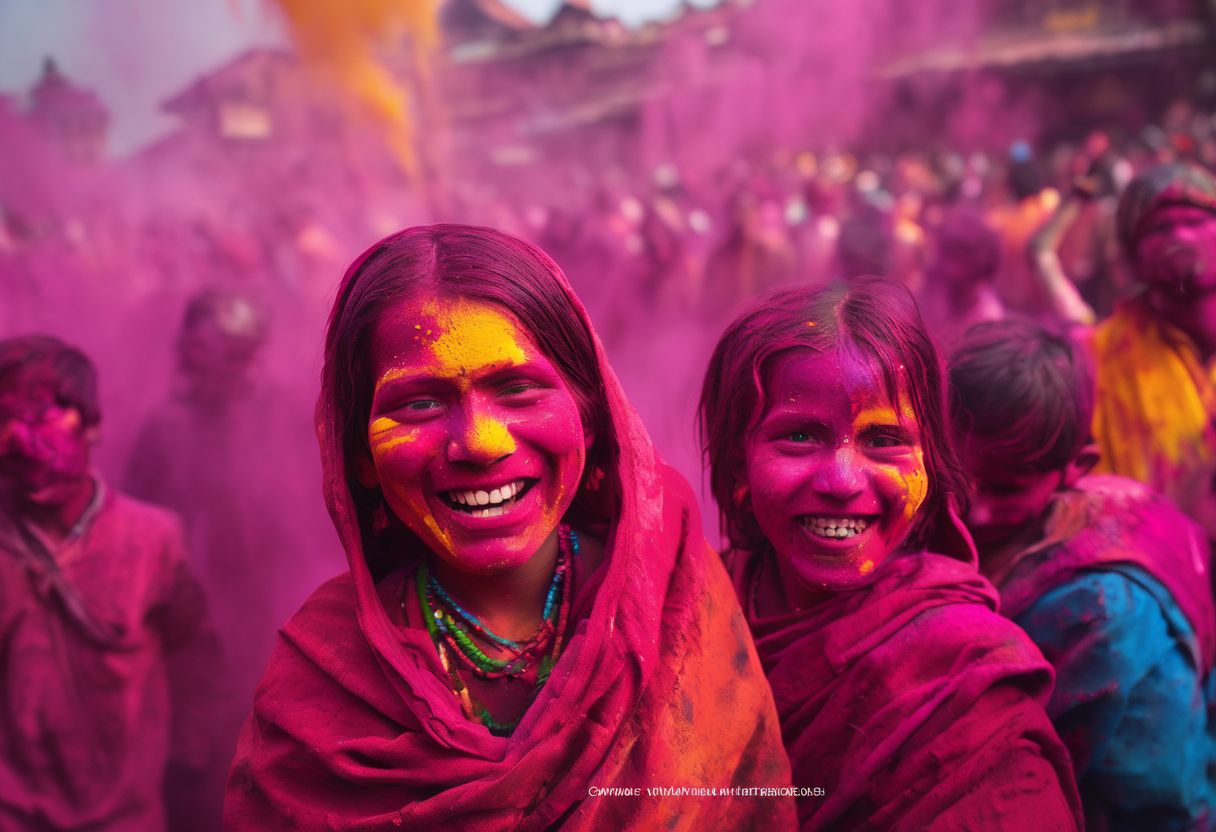
Holi, also known as the festival of colors, is a annual celebration that holds immense cultural and religious significance in Nepal, particularly in the city of Kathmandu. This vibrant festival is celebrated on the full moon day of the Nepali month of Falgun, which usually falls in February or March, and marks the arrival of spring. It is believed that Holi originated as a Hindu festival, but has since been embraced by people of all religions and backgrounds. The festival is a time of joy, love, and unity, as people come together to celebrate the victory of good over evil.
The history of Holi in Kathmandu dates back to ancient times, and is deeply rooted in the mythology of Hinduism. Legend has it that the festival commemorates the story of Prahlad, a young devotee of the Hindu god Vishnu, who was saved from the evil demon Holika by Vishnu himself. To celebrate this triumph of good over evil, people light bonfires the night before Holi, known as Holika Dahan. On the day of Holi, the streets of Kathmandu are ablaze with vibrant colors, as people throw colored powders and water at each other, sing and dance to traditional folk songs, and indulge in delicious sweets and savory delicacies. Holi is not just a festival, but a way of life for the people of Kathmandu, who believe that the colors of Holi represent the colors of life, and the love and unity that binds us all together.